The price comes from the shop and can change. Check price, size and delivery on the shop's page before you order.
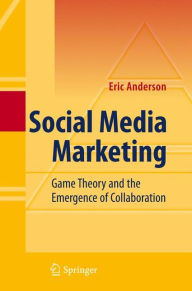
Preface Social media marking has been heralded as a sea change in the market- consumer relationship, but its rapid growth and rabid following among m- keters has also produced a sea of confusion. Lacking any durable framework for understanding how, why, and on what terms the consumer relationship has changed under social media, marketers pursue new venues for their newness alone – with decidedly mixed results. This book finds a theoretical framework for social media marketing in the science of game theory, with its focus on adversarial but mutually dependent relationships. Originally developed to guide nuclear brinksmanship policy during the Cold War, game theory provides the foundation for an evoluti- ary view of social media marketing. Through fascinating game theory c- cepts like the Prisoner’s Dilemma, the Stag Hunt, Self-Command, and Job Market Signaling, this study uncovers the cooperative trends that brought marketing to its present state and points the way toward marketing’s future course. I. Der Drehbuchautor und seine Rechte VII VII Vorwort Contents Chapter 1: Surviving the Customer . . . . . . . . . . . . . . . . . . . . . . . . . . . . . 1 1. 1 The Origins of Game Theory . . . . . . . . . . . . . . . . . . . . . . . . . . . . . . . . 5 1. 2 Game Theory, the New Media, and the NEW New Media . . . . . . . . . 7 1. 3 The Payoff Matrix . . . . . . . . . . . . . . . . . . . . . . . . . . . . . . . . . . . . . . . . 8 Chapter 2: Zero-Sum Games in Traditional Marketing . . . . . . . . . . . . 13 2. 1 Zero-Sum Games and the Problem of Transparency . . . . . . . . . . . . . 14 2. 2 The Zero-Sum of Pricing Strategies. . . . . . . . . . . . . . . . . . . . . . . . . . 16 2. 3 The Wisdom of Randomization . . . . . . . . . . . . . . . . . . . . . . . . . . . . . 18 2. 4 Randomization and A/B Testing. . . . . . . . . . . . . . . . . . . . . . . . . . . . . 20 2. 5 The Hazards of Entrenchment . . . . . . . . . . . . . . . . . . . . . . . . . . . . . .